
Mining minerals from desalination brine in Saudi Arabia
21 December 2025
Published online 21 December 2025
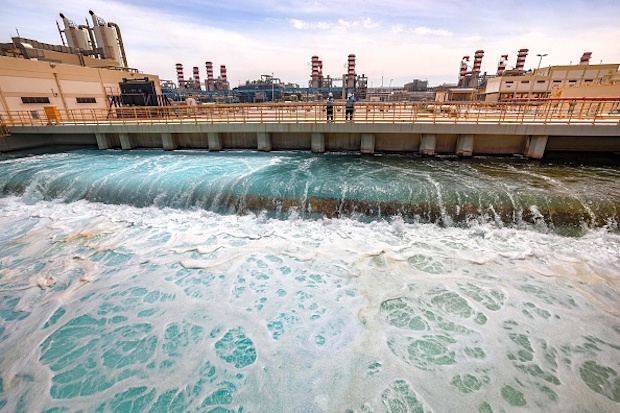
Saudi Arabia produces large amounts of freshwater from seawater desalination creating a concentrated salty byproduct called brine. Most brine is treated as waste and discharged back to the sea, wasting potential value and stressing local marine environments.
FAYEZ NURELDINE/AFP via Getty Images
The Saudi Water Authority (SWA) published a report proposing a practical alternative: turning desalination brine into a source of useful minerals, such as sodium, potassium, and magnesium salts, potentially raising revenue that could offset desalination costs.
The authors propose extracting marketable salts and minerals from brine by concentrating the brine through nanofiltration to thicken the brine using less energy than traditional evaporation. This process separates magnesium and sulfate from sodium and chloride, creating two streams that are easier to process. Then, products are separated and recovered, particularly sodium chloride, bromine/bromide salts, magnesium salts, and potassium salts.
The report suggests starting with extracting high-return products, such as bromine and sodium chloride, followed by magnesium and potassium salts.
"The good news is that many countries in the region are already relying heavily on desalination, so adopting something like brine mining is a logical next step. That not only reduces the overall cost of desalination but also creates new economic opportunities", says Ahmad Ayoub, a researcher at Mediterranean Agronomic Institute of Bari in Italy.
There are three main challenges, Ayoub says. “First, the upfront cost is high. These systems need serious investment in infrastructure and R&D. Second, you need skilled people to run them, and third, you must make sure it’s done in an environmentally safe way so that marine ecosystems
aren’t harmed. If countries can address those three issues, the potential is huge."
doi:10.1038/nmiddleeast.2025.216
21 December 2025
21 December 2025
11 December 2025
Sign-up to receive our e-alert update every two weeks to keep up with everything new on the portal.
Sign up for e-alerts
Stay connected: