
The state of smart cities in MENA
11 December 2025
Published online 11 December 2025
A look at how technology, integration, and community engagement play a central role in building smart cities projects in the region.
Seven in ten people will be living in cities by 2050, according to modelling by the World Bank. As cities grow, new solutions are needed to accommodate increasing population, urbanization and environmental challenges. Smart Connected Communities (SCC) is among those solutions.
SCC evolved through generations. At first, the focus was integrating technologies like the internet of things (IoT), cloud computing, big data, and artificial intelligence. The concept then included decision makers who can implement technology to boost quality of life, then finally drew in citizens in creating and implementing solutions to persistent challenges.
The idea of SCC emerged in 2008, when IBM and Cisco helped build monitoring centres in Rio de Janeiro, Brazil, and Songdo, in South Korea, where screens allowed the observation of traffic flow, electricity usage, and maintenance needs, all in real time.
From then on, the development of SCCs went through three phases: the first started in 2011, focusing on sustainability measurement, the second followed in 2015–2016, with a push for smart city indicators and standards, finally, the third came after 2016, aiming at holistic assessment and citizen engagement.
The MENA region is home to dozens of SCC initiatives; the majority of them are located in the Gulf region.
Rachel George, lecturing fellow at Sanford School of Public Policy, Duke University, explains that smart cities in the region offer substantial promise for scaling efficient and transformative solutions to help security and policing, safety infrastructure, and environmental sustainability.
The infrastructure
The most essential feature for smart city infrastructure is integration; the seamless connection of digital technologies with urban systems to optimize efficiency, sustainability, and quality of life, according to Renukappa Suresh, senior lecturer at the Faculty of Science and Engineering at the University of Wolverhampton. Smart infrastructure should enable data-driven decision-making across all sectors, ensuring resources are used effectively while minimizing environmental impact. However, smart cities can only help if they are rolled out to work seamlessly in existing cities or urban areas that people already live in, says Mohammed Soliman, senior fellow at the Middle East Institute, based in Washington DC, United States. In the Middle East, the risk is that they become isolated projects, rather than easing pressure on existing capitals.
He adds, “People won’t move to these places just for solar panels. They need jobs, affordable homes, and a sense of community. That’s what makes a city truly sustainable, both economically and socially.”
Technology is central to smart cities and SCC. Safety enhancement is one of the outcomes as technology can help reduce crime rates through real-time crime mapping, and initiate predicative policies through analysing patterns and using statistics.
Smart applications can support chronic patients with vital readings and sharing the data with health professionals for assessment. Other health improvements include telemedicine, digital communications, and optimizing emergency responses and operations.
Furthermore, technology can help clear paths for ambulances, reduce commuting time by 15 to 20%, and reduce water loss by 25% using sensors and analytics.
Smart Cities in MENA
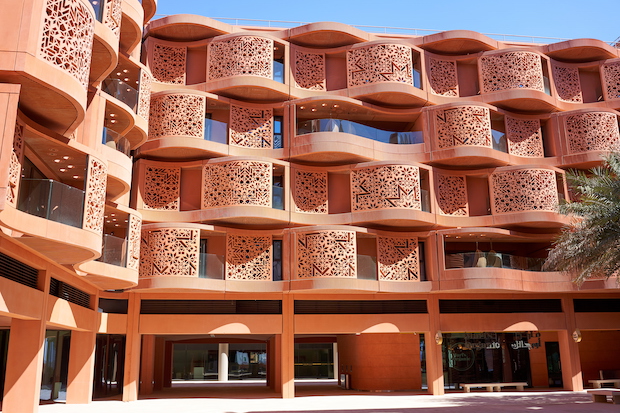
Masdar City in the UAE, NEOM in Saudi Arabia, Lusail in Qatar, among others, are examples of the ongoing smart cities initiatives in MENA.
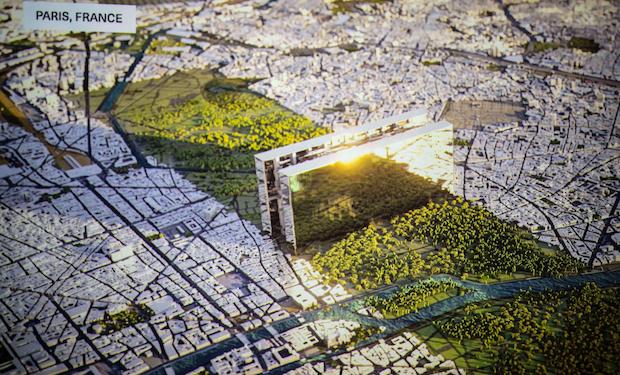
NEOM relies on knowledge, trade and innovation, hosting three projects, Oxagon; aiming to be an industrial and innovation hub, Trojena; seeking to adapt the region’s climate, and The Line; optimizing transportation.
With investment of more than $US45 billion, Lusail smart city is set to host 500,000 residents, and aims to improve lifestyles through four pillars; future, people, business, and integration.
Through Lusail Control and Command Center (LCCC), all sensors and meters are monitored, and information is transferred via a fibre network throughout the city. LCCC also operates telecommunication, electricity, waste collection, and district cooling through meters that can provide real-time data. All homes in Lusail have smart automation and are managed through a central system.
UAE’s Masdar City is said to be the only carbon neutral city, aiming for zero emissions. Of the city’s buildings, 90% are made of low carbon cement.
Mohamed Al Breiki, executive director of Sustainable Development at Masdar City concurs that smart cities in the region are being built to be economically competitive, environmentally responsible, and socially vibrant, and Masdar City is designed to achieve all three.
Masdar is home to more than 1,700 companies from 90 countries, investing in sectors like energy, life sciences, Agritech, and clean technology.
Al Breiki explains that across the city, sensor networks and smart controls manage lighting, cooling, and irrigation in real time, responding to occupancy and climate conditions to optimize comfort and efficiency. He adds, “To be fully functioning, smart cities require more than sustainable infrastructure and a strong economic base, they need governance that ensures transparency, accountability, and ethical operations.”
The inclusion
SCC communities should collaboratively address challenges like the impact of fossil fuels use; providing alternatives. For instance, people in Europe, can invest in or help operate community solar or wind farms, energy storage, and other joint assets. People can use technology to increase safety and privacy or reduce waste.
These practices are not the same in the Gulf, where SCC are seen rather as big projects with a central master plan and western design. For instance, Masdar City has been criticised by some researches of being an economic enterprise rather than a social initiative.
Similarly, researchers envision some challenges in NEOM, including the labour market in Saudi Arabia being highly dependent on expatriates. And although the government has allocated US$500 billion to the project, there is still a financial risk, given the investment costs and timeline.
Accordingly, researchers in a recent study advised Foreign Direct Investment (FDI), low-interest loans, partnerships, joint ventures, grants, together with the support of the government. They also recommend flexibility in social policies and norms, in order to accommodate a million people from different cultural and economic backgrounds.
Suresh believes that most SCCs in the region remain in different stages of development or partial implementation, focusing on energy, transport, or governance systems.
For these SCCs to become fully functioning, Suresh says, they need: robust digital infrastructure, integrated governance frameworks with data security and privacy regulations, inclusive policies ensuring affordability and accessibility, sustainable financing and long-term investment, and community engagement, so people see tangible benefits in daily life.
Equally important, he adds, is scalability and inclusivity, ensuring solutions address the needs of diverse populations rather than serving only affluent groups. When integration, sustainability, and inclusivity converge, smart city infrastructure becomes more than technology; it becomes a driver of resilience, competitiveness, and social well-beingAlthough SCC aim to transform lives in a positive way, they have their possible drawbacks. Establishing SSC infrastructure and its maintenance puts a burden on the public funds and enforces budget cuts in other areas. Furthermore, smart cities mainly rely on technology and data collection, which creates privacy concerns, and a risk of cyber-attacks which have the potential to undermine every aspect of life in smart city, including water, power supply and transport.
doi:10.1038/nmiddleeast.2025.211
11 December 2025
11 December 2025
05 December 2025
Sign-up to receive our e-alert update every two weeks to keep up with everything new on the portal.
Sign up for e-alerts
Stay connected: