
Special Issue: Water Narratives
24 December 2025
Published online 23 December 2025
While importing supplies may ease pressure on local water resources in some countries in MENA, it can also lead to a decline in self-sufficiency and increase reliance on exports.
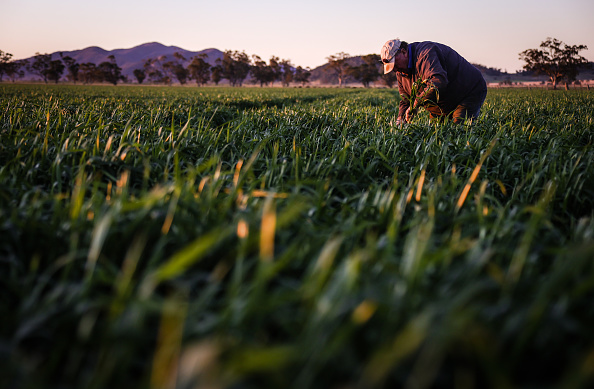
Water scarcity is a reality in many MENA countries, limiting their ability to grow food locally. Populations rely on food imports, which bring vast amounts of ‘virtual water’, the embedded water that is used directly and indirectly throughout the food production chain.
Every tonne of rice imported to the region carries the water used to produce it. While this hidden trade helps conserve local water resources, there are inbuilt risks through climate change, potential supply disruptions, and global market challenges.
In principle, virtual water trade should relieve water stress in developing countries, as they import the majority of their food rather than producing it. However, the reality is often the opposite, as all net exporters of virtual water are developing countries, except Australia.
An Ecological Indicators study found that virtual water trade reduced water stress in 86% of developed countries and increased it in 71% of developing countries in 2005.
Many water-scarce countries use their limited resources to grow crops for export, helping developed countries conserve their own supplies.
Another study published in 2021 in Water Supply highlighted that India, one of the world's largest rice exporters, may lose its water resources within 300 years. India exports around 32 billion m3 of water or 1.6% of total available water and contributes a 24% share in the global virtual water export, while virtual water import is negligible.
Strategic Necessity
MENA is the most water-scarce region in the world, and achieving complete food self-sufficiency is not a realistic goal for most countries, according to Mohamed Hamdy, Senior Land and Water Officer and Delivery Manager of the Regional Water Scarcity Initiative at FAO’s Regional Office for the Near East and North Africa.
“Food imports and virtual water trade are a strategic necessity for Arab countries that face water scarcity, increasing population growth, and increased demand for food,” Hamdy explains.
“Each country should allocate its water resources to the most important crops, whether based on national consumption needs or economic value, and import the rest,” he adds.
As part of the solution, Hamdy calls for enhancing climate-smart agriculture, cultivating water-efficient crops, relying on technology that enhances climate change prediction and offers advanced forecasts of the state of agriculture and water, and using treated wastewater in agriculture.
Dependence and Sovereignty
Hala Youssef Mahmoud, a senior official at Egypt’s Ministry of Agriculture, believes that virtual water trade has become a key component of achieving food security, as the Arab world imports more than half of its food needs. However, “it may also expose countries to external shocks.”
Arab countries imported more than 921.2 billion cubic metres of green water and 80.5 billion cubic meters of blue water through staple crops between 2000 and 2012. While importing contributed to easing pressure on local water resources in countries like Egypt and Saudi Arabia, it led to a decline in self-sufficiency and an increase in reliance on exports.
Food sovereignty should be ensured through stable and diversified access to food, since exporting countries may use food as a political tool. As Hala explains, “overdependence can weaken the political and economic negotiating power of Arab nations, especially during crises.”
The Way Forward
Despite the risks, virtual water trade still offers a chance to strengthen intra-Arab agriculture integration, says Ali Eissa, senior agricultural economist at the Arab Organization for Agricultural Development.
Ali explains, “countries like Sudan and Mauritania, rich in water and arable land, could become regional suppliers of water-intensive crops if their resources are efficiently utilized.” Climate-smart agriculture, the development of intra-Arab agricultural trade, the use of non-conventional water resources, and the integration of the virtual water concept into water and food policies could be key solutions to enhancing food security and reducing pressure on limited water resources.
“However, weak institutional coordination and inadequate trade infrastructure between Arab countries limit these benefits,” Ali adds.
Ali agrees that the path forward lies is smarter allocation of local water resources, stronger regional agriculture integration, and climate-resilient technologies and practices. If managed properly, the virtual water trade may become a foundation for the region's long-term food security, rather than a liability for future generations.
doi:10.1038/nmiddleeast.2025.221
24 December 2025
24 December 2025
24 December 2025
Sign-up to receive our e-alert update every two weeks to keep up with everything new on the portal.
Sign up for e-alerts
Stay connected: