
Why the Arab Region Must Adopt the WEFE Nexus for Water Security
24 December 2025
Published online 24 December 2025
Five historic sites demonstrate how water was engineered, honoured, and transformed into a lasting part of the Arab heritage.
Water has shaped the Arab region across centuries, as a matter of identity, power, cultural expression, and survival.
From the early Islamic period to the Ottoman era, rulers and communities invested heavily in systems that supplied, displayed, and celebrated water. Wells and canals sustained pilgrims on desert routes, public fountains doubled as charitable gifts and schools, water wheels powered irrigation and became symbols of civic pride, and palaces were painted with imagery of rivers, seas, and myths, shaping cultural memory for centuries to come.
These projects were both practical infrastructure and cultural statements. They reveal how societies in the Arab world combined engineering skill with artistic ambition to make water visible, memorable, and enduring. In the Arab world, water has been a symbol of purity, generosity, and power, expressed through art, architecture, storytelling, and ritual.
Five historic sites offer vivid reminders of this legacy.
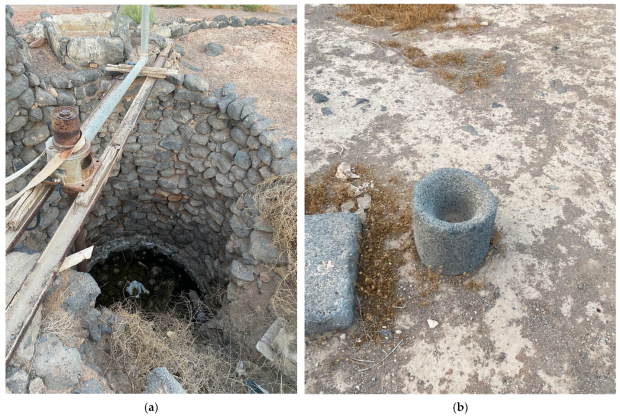
| Photographic survey of the findings of Fayd Fortress, one of the wells in the archeological sit. Credit: Monica Moscatelli/ Sustainability 2024, 16(16), 7055 |
Zubaydah’s Canal & Wells (Completed by 801 AD)
Stretching across some of the harshest terrain between Kufa and Mecca, the Darb Zubaydah served as a lifeline for Hajj pilgrims. Commissioned by Queen Zubaydah, the infrastructure included dozens of wells, cisterns, dams, and shaded rest stations, sustaining travellers with carefully managed water.
“Queen Zubaydah’s commissioning of this water infrastructure was both charitable and strategic,” says Monica Moscatelli, Associate Professor of Architecture at Prince Sultan University in Riyadh. “The Darb Zubaydah was a pioneering example of how infrastructure could sustain religious, social, and political cohesion.”
Its legacy endures beyond its engineering. As Moscatelli notes: “Today, its significance goes far beyond its technical function. The Darb Zubaydah embodies the cultural values of Islamic architectural heritage, where water was considered sacred and central to life, spirituality, and community resilience.”
In her 2024 study, Moscatelli highlights it as “a model of how heritage can drive sustainable tourism development by connecting faith, identity, and history with contemporary cultural and economic opportunities.”
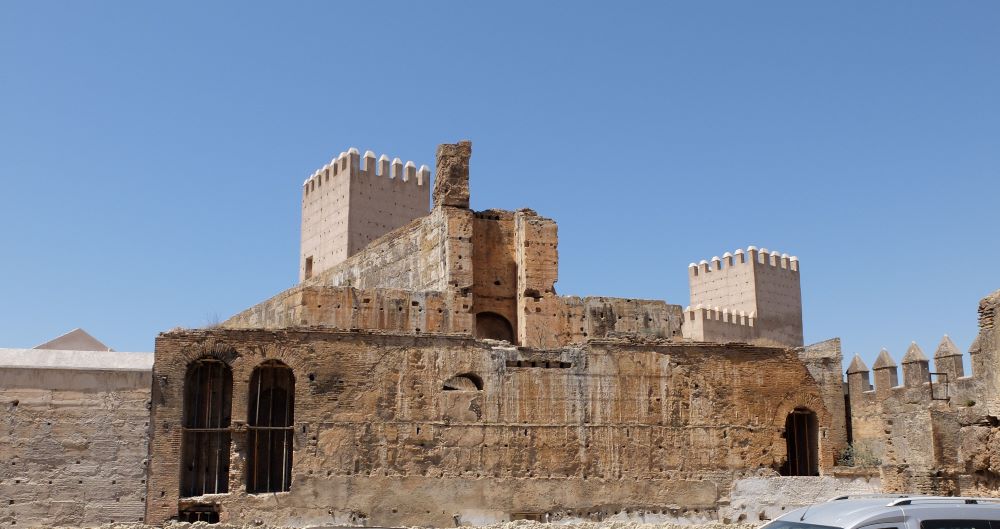
.jpg)
Sabil-Kuttab of Abd al-Rahman Katkhuda (Cairo, 1744 CE)
Built on Cairo’s Al-Mu'izz Street street in 1744 CE, the Sabil-Kuttab of ʿAbd al-Rahman Katkhuda stands as one of the Ottoman city’s urban landmarks.
At street level, its sabil dispensed free water; above it, the kuttab served as a Qur’an school for children. This architectural pairing embodied the charitable ideal of fi sabīl Allāh—giving water for God’s sake—while also tying philanthropy to education and civic presence.
According to Nehal al-Shamy, a researcher at the American University in Cairo, whose thesis is on the Sabil-Kuttab, “Sabils, in general, were parts of waqfs (religious endowments). Therefore, although they might seem utilitarian, they still possessed a clear religious identity. Water has a special place in Islam as the material of life and creation. Many sabils also bear inscriptions likening them to sacred sources, such as Salsabil, Kawthar, and Zamzam, highlighting their role in sustaining lives.”
Yet they also carried political weight. As al-Shamy explains, Katkhuda’s sabil “was meant to cement the patron’s position and convey his political ambitions through creating an architectural icon in one of the most politically significant neighborhoods in Cairo.”
Doris Behrens-Abouseif, emerita professor at SOAS University of London, and a scholar of Cairo’s Islamic architecture, highlights the broader evolution: “The sabil was always a charitable institution to give water to the thirsty. In the Mamluk period, we get the sabil-kuttab together. The Ottomans, rather than investing in many new mosques, built sabil-maktabs all across Cairo. They emphasized public hygiene, while the combined sabil and primary school created a lasting civic presence.” She also notes their aesthetic appeal: “Vastly decorated, with fine interiors and painted ceilings. People came for water and looked up to see art.”
Today, many sabils are preserved under Egypt’s antiquities authorities. Some, including Katkhuda’s, have been adapted for new uses: “It is used as a display gallery for the products of the Fustat Traditional Crafts Center,” says al-Shamy. “These initiatives keep the sabil active, allowing it to be open for visitors.”
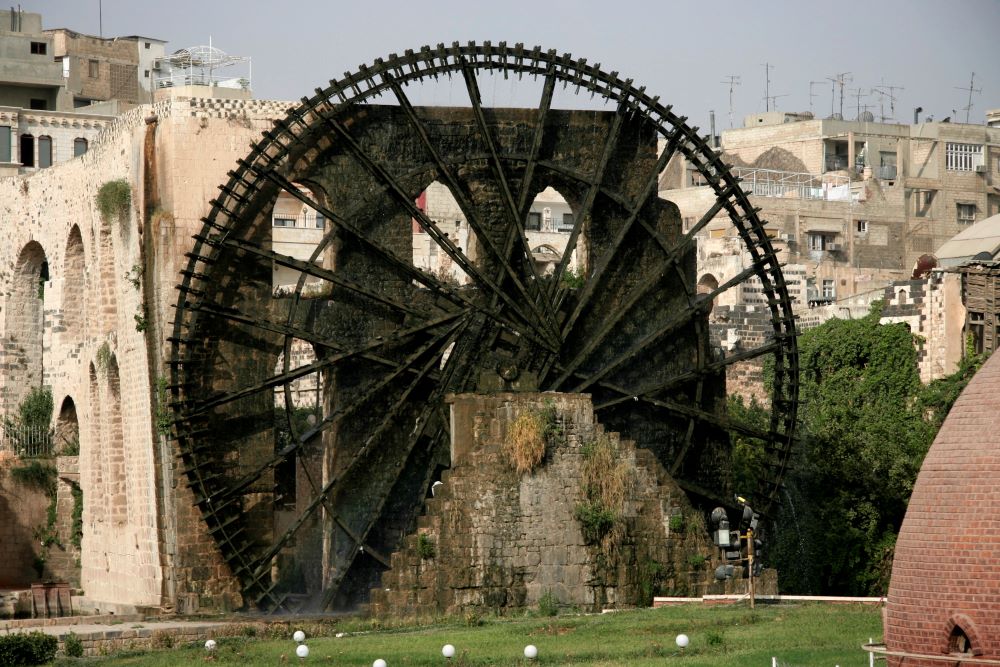
Noria and houses in Hama, Syria. Credit: Erik Albers/ CC0 1.0
Norias of Hama (Syria, 12th–14th century; The oldest surviving noria: 1361 CE)
Along the Orontes River in Syria, vast wooden water wheels once turned day and night, lifting water into stone aqueducts that fed gardens, mosques, and homes. The largest, the Noria al-Muhammadiyya, was built in 1361 CE, measuring 21 metres in diameter.
Beyond their practical function, the wheels became an emblem of Hama itself; their rhythmic creak and spray forming the city’s soundscape for centuries.
In 2006, the American Society of Mechanical Engineers designated the Noria al-Muhammadiyya an ASME Historic Mechanical Engineering Landmark, citing it as a rare surviving example of pre-modern hydraulic technology. What survives in memory is the “creaking and splashing as the wood is distorted by the weight of the water and the endless rotation. Given that these are some of the oldest water wheels in the world, maybe they can be forgiven for their groaning and moaning.,” wrote Trevor Cox, Professor of Acoustic Engineering at the University of Salford, in his Sound Tourism blog.
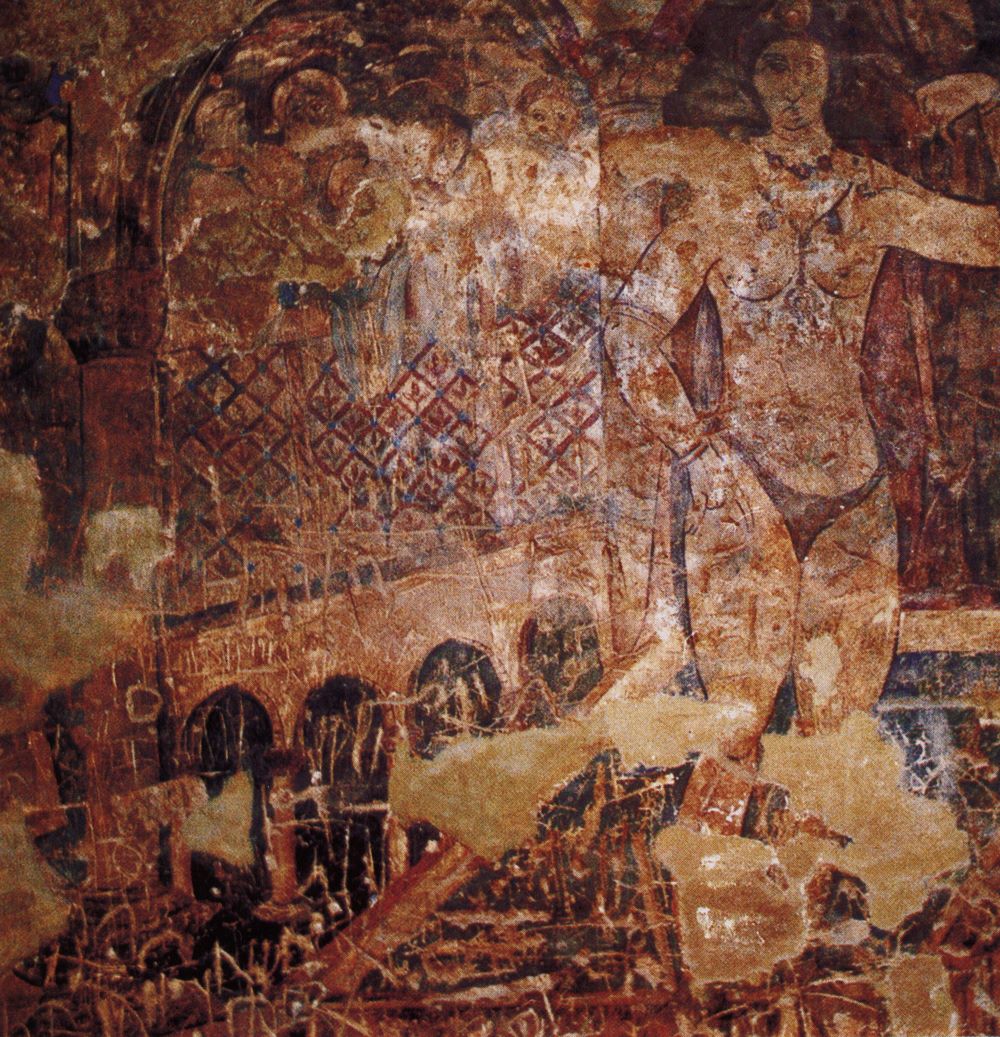
| C.Vibert-Guigue |
Frescoes at Qusayr ‘Amra (Jordan, c. 723-743 CE)
In the eastern Jordanian desert, the Umayyad prince al-Walid ibn Yazid built Qusayr ‘Amra, a bathhouse retreat whose walls are covered in painted scenes. Bathers recline in flowing waters, zodiac signs adorn the domed ceiling, and mythic tales unfold across the plaster; one of the richest surviving examples of early Islamic secular art.
Designated a UNESCO World Heritage Site in 1985, the bathhouse is also the subject of ongoing preservation by the World Monuments Fund, which highlights the frescoes’ unique depiction of water as both ritual and luxury in a desert setting.
Mosara Garden & Great Waterwheel (Fez, 13th century)
In 1287, Marinid Sultan Abu Ya’qub Yusuf commissioned the Mosara Garden on the northern outskirts of Fes elJdid, Morocco. It was a vast royal pleasure estate, irrigated by a 26-metre noria, that lifted water from the Fes River into aqueducts feeding gardens, pavilions, and ornate grounds.
As historian Inigo Almela observes in his published paper: “Although the estate is 250 metres from the Fez River and from the city, its dependence on the water course and its connection to the court scene linked it directly to New Fez…. It became one of the most remarkable highlights in Fez during the Marinid period.”
This feat was not just technical but symbolic, a demonstration of hydraulic ambition and dynastic prestige, inscribing water into the very identity of Marinid urban design. Though now mostly vanished, the Mosara estate remains a potent symbol of how water, architecture and power were intertwined.
doi:10.1038/nmiddleeast.2025.220
24 December 2025
24 December 2025
24 December 2025
Sign-up to receive our e-alert update every two weeks to keep up with everything new on the portal.
Sign up for e-alerts
Stay connected: