
Special Issue: Water Narratives
24 December 2025
Published online 24 December 2025
As water scarcity deepens across MENA, wastewater use is emerging as a solution. We look at projects and technologies being adopted across the region.
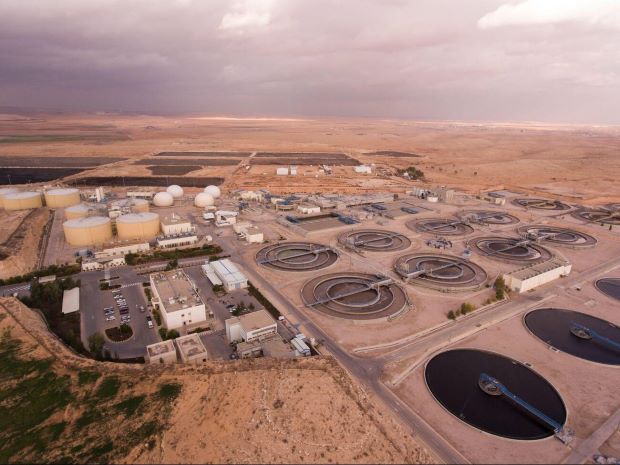
The Bahr El Baqar wastewater plant in Egypt recycles more than five million cubic metres of water every day for agricultural use daily for farmland. Yet across the region, many similar facilities are either operating partially, unfinished, or abandoned.
The Middle East and North Africa region has 14 of the world’s top 20 water-scarce countries. This challenge, driven by climate change, urbanization, and population growth, demands reliable and sustainable solutions.
Wastewater Treatment (WWT) removes pollutants, microorganisms, and chemical toxins, making water safe for reuse. Plants often combine two or more technologies to reach the required quality, depending on costs, purpose, and environmental factors.
Conventional methods for WWT deliver results quickly but are energy-intensive, whereas extended methods are nature-based systems, like lagoons and reed beds, that require more land but consume less energy and require minimal maintenance.
Why plants fail
One of the main challenges for wastewater treatment in MENA is cost.
“Many WWT plants in MENA have been constructed but never operated close to capacity, or shut down,” says Sammy Kayed, co-founder of the Environment Academy at the Nature Conservation Center, American University of Beirut.
Energy is another challenge. Treatment plants require more energy, especially in hot climates, explains Mostafa Hadei, Assistant Professor of Environmental Health Engineering at Tehran University.
Looking for smarter Solutions
Efforts are already in place to overcome the challenges and introduce innovations in WWT. Between 2018 and 2022, the International Water Management Institute (IWMI) launched ‘ReWater’, a regional project aimed at expanding water reuse in Egypt, Jordan, and Lebanon. The project addressed cultural resistance, outdated regulations, and the lack of financial models for cost recovery.
As one of the ReWater project partners, the International Center for Agricultural Research in the Dry Areas (ICARDA), has experimented the usage of wastewater on specific crops and soil to reach the best techniques for irrigation systems, at the Sarapium Wastewater Treatment Plant in Ismailia, Egypt.
ReWater MENA launched the National Analysis of Water Reuse Potential in Irrigation, offering a technical and governance guidance to the potential of water reuse in Lebanon and the potential of its manifestation in the current political and economic context.
Kayed suggests nature-based solutions that benefit both people and the planet. This method usually involves Reeds, coarse grasses that grow in wet areas, and is used as a cheap method to treat liquid waste.
“One promising method I've worked on is lagoons and reed beds,” says Kayed. “If designed carefully, they can operate relatively passively at a fraction of the cost and are best suited for irrigation of orchards”.
Hadei says that the broader adoption of WWT depends on comprehensive planning, strong public-private partnerships, financial incentives, and applying “fit-for-purpose” treatment that cleans water only as much as needed for its intended use.
Sustainable Practices
Building on the ReWater project, IWMI launched ReWater+ in Egypt, Jordan, and Morocco, as part of the Near East and North Africa Water Scarcity Initiative. The project involves multiple partners and stakeholders collaborating to analyze costs, benefits, and social impact.
“Reuse projects often reduce emigration from rural areas, fix soil, and increase employment rates, which in turn offer financial gains,” says Youssef Brouziyne, the International Water Management Institute's (IWMI) MENA representative. In the Bahr El Baqar project operational costs are optimized at every step, and revenue is diversified through selling byproducts. The plant was launched Bahr El Baqar in 2021, and treats 5.6 million cubic meters of water per day to cultivate more than 400,000 acres in Sinai.
Integrating local capabilities is another factor in ensuring sustainability. “WWT plants can produce biogas from sludge to lower energy costs, and nutrients can be recovered and reused in agriculture,” says Hadei. The As-Samra plant in Jordan, for example, produces almost 80% of its required operational energy from biogas and hydropower, while generating bio-solids for fertilizer and fuel.
Other projects highlight the social dimension of water reuse, like the SafeAgroMENA project by IHE Delft, running in Egypt, Lebanon, Iraq, and the Netherlands. The project employs an interdisciplinary approach to provide safe water for agricultural use, helping small-scale farmers reuse treated wastewater safely, according to Hadeel Hosney, the project leader.
“SafeAgroMENA is economically relevant and sustainable, as it conducts comprehensive assessments from a technical, political, and socio-economic perspective,” says Hosney. This practice allows the development of tailored, nature-based solutions using local materials from target countries.
Digital innovation is also shaping the sector, including decision-support, earth observation, and data analytics tools, all powered by AI. Such tools offer valuable insights into wastewater's supply and demand, and recommend water reuse accordingly, in countries like the United Arab Emirates, Saudi Arabia, and Egypt.
doi:10.1038/nmiddleeast.2025.219
24 December 2025
24 December 2025
24 December 2025
Sign-up to receive our e-alert update every two weeks to keep up with everything new on the portal.
Sign up for e-alerts
Stay connected: